
But now that woman has grown old and feeble,
Not being able to see her country turn back to gold.
Her mind and heart at rest.
She smiles and says:
‘Yes finally I am in my home, Somaliland’.
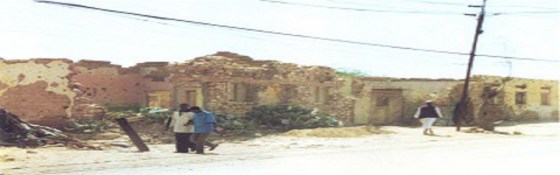
But now that woman has grown old and feeble,
Not being able to see her country turn back to gold.
Her mind and heart at rest.
She smiles and says:
‘Yes finally I am in my home, Somaliland’.
(BSMG – Liban Obsiye) Most asylum seekers in the UK are generally happy to receive the right to remain and…
The housing crisis has had a devastating impact on us all. Even the comfortably housed can be homeless if the slightest thing goes wrong.With rocketing prices and high unemployment, a new policy direction must be taken to tackle the socially crippling British housing problem.

If president Obama to become a transformative leader that leaves a lasting mark on American history, he should rise to the many challenges ahead.
Curad (first born): A poem about accidental leadership.
Diversity and community participation can provide real opportunities for political parties not only to reflect the electorate but revitalise British politics too.
If the Government is committed to tackling educational inequalities in our schools, why the Education Secretary Michael Gove made recruitment of good teachers for inner city schools even harder than it already is?
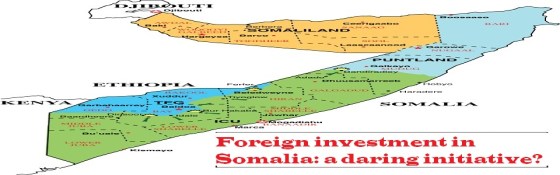
Investing in a conflict zone like Somalia can be suicidal for global businesses even if the rate of return for their faith is higher. There is the need to worry about Corporate Social Responsibility, staff security, eruption of spontaneous violence, poor infrastructure and no legal recourse if things go wrong. Moreover, in the absence of widely available opportunities and political voice, together with corrupted leaders that embezzled seven out of every ten dollars they received according to a UN report published in July and strong presence of Al-Shabaab, people have come to rely on their tribes for security, protection and welfare. As a result, it would be very hard for both local and foreign investors to just set up a business in a certain region, bring their chosen staff and get on with their business without employing local tribes men in key posts even if they lack the qualifications and experience. Where they do decide to employ locals, investors may have to make enormous investment in the education and training which can deter even those with the deepest pockets.
One year on from the devastating and destructive London riots, it appears as though things are getting worse as the economy is still unable to provide the opportunities young people need to escape poverty in some of the most deprived neighbourhoods in the UK. BSMG to commemorate the first anniversary of the riots publishes an academic essay exploring the root causes of social exclusion which ignited into a near week of terror across major UK cities. An antidote for all of today’s young people’s ills is seen as employment but is this enough for the creation of an inclusive society today? We do not think so.

Although many ethnic residents in Easton and St Pauls feel that the police are biased, if not totally still racist, and victimise communities in the area, the majority of residents who live and socialise in Easton feel happier not because of the greater police presence, but because of the high visibility policing in the area which has resulted a reduction in crime rate. In addition, the Neighbourhood Partnership structures have made the police to be more accountable to the local residents by regularly attending not only the Neighbourhood Partnership/Forum meetings but relevant local meetings too – including the Stapleton Road Working Group and Somali Forum meetings, many a list – to explain policing strategies, share ideas, and discuss challenges and future plans while answering questions from members of the diverse local communities. However, better Neighbourhood policing, in any given area, relies on the level of community participation and engagement. Therefore, the selection of issues that is top of the list of community concern such as stop and search policies, heavy handedness and victimisation, amongst many, should be taken seriously and addressed appropriately both strategically and on the ground level.
 Bristol Somali Media Group